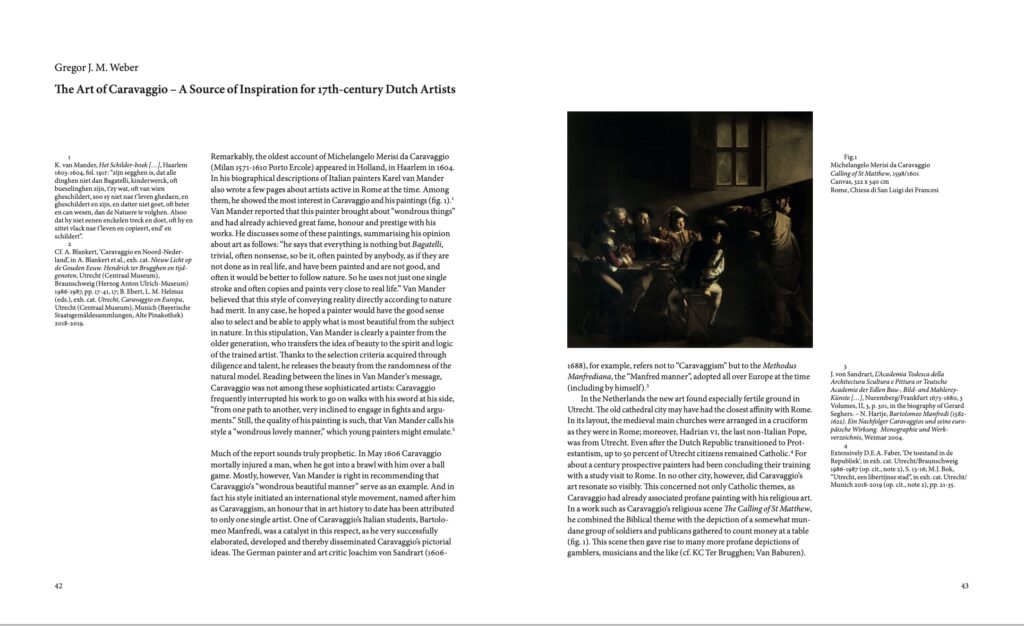
This essay explores how Caravaggio’s revolutionary realism and dramatic lighting profoundly shaped Dutch painting. First recorded by Karel van Mander in 1604, Caravaggio’s naturalism—painting directly from life—was admired yet controversial for its raw honesty. His influence spread through Rome via Bartolomeo Manfredi and reached Utrecht, where Hendrick ter Brugghen, Dirck van Baburen, and Gerrit van Honthorst became leading Caravaggists. Their works introduced lifelike figures, stark chiaroscuro, and intimate scenes illuminated by candlelight. This style influenced Jan Lievens, Rembrandt, and later masters like Frans Hals and Vermeer, whose use of light and realism echoed Caravaggesque ideals. Artists such as Leonaert Bramer and Adam Elsheimer adapted these techniques to smaller, narrative compositions. Although Caravaggism waned by 1630, evolving into Dutch Classicism, its emphasis on naturalism, light, and human immediacy remained central to the Dutch Golden Age aesthetic.