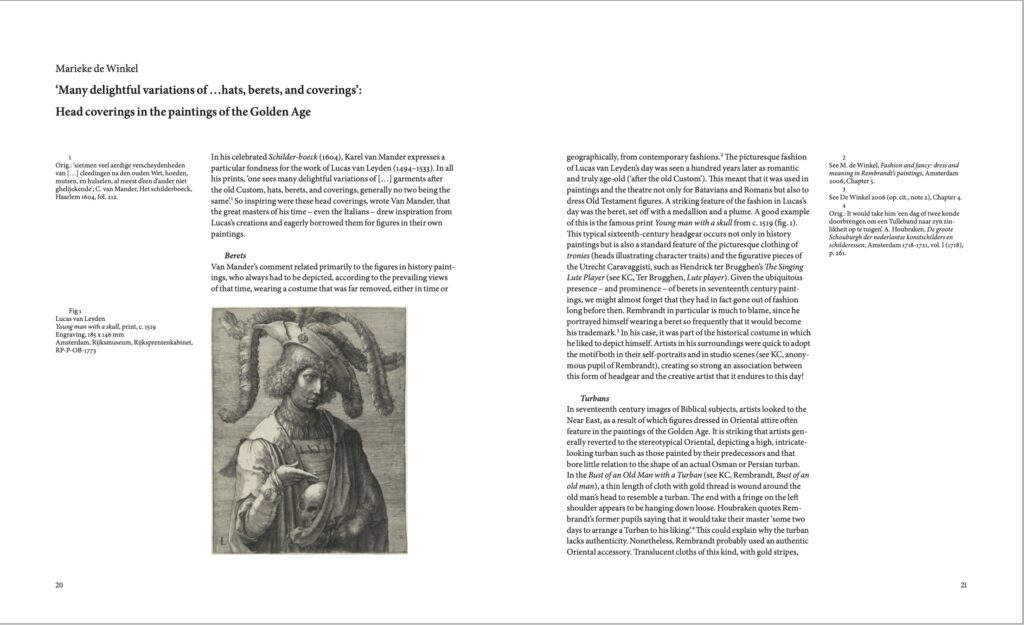
This excellent essay examines how hats, berets, turbans, and hairstyles reflected both fashion and meaning in seventeenth-century Dutch art. Inspired by Karel van Mander’s praise of Lucas van Leyden’s imaginative costumes, artists used distinctive headgear to evoke history, status, and character. Berets, though long out of fashion, became symbols of artistic identity through Rembrandt’s self-portraits and those of his pupils. Turbans, often exaggerated and fantastical, expressed Orientalism and biblical themes rather than authenticity, revealing Dutch fascination with the East. Broad-brimmed hats dominated men’s attire, serving practical, social, and symbolic roles, while women’s hats remained rare—straw hats appeared mostly in pastoral or allegorical scenes. Later in the century, hairstyles replaced head coverings as markers of fashion and time, providing valuable clues for dating paintings and interpreting their social or moral significance.
Disclaimer: this podcast style story has been produced with the help of GoogleLM and may contain errors. The full essay is also posted below