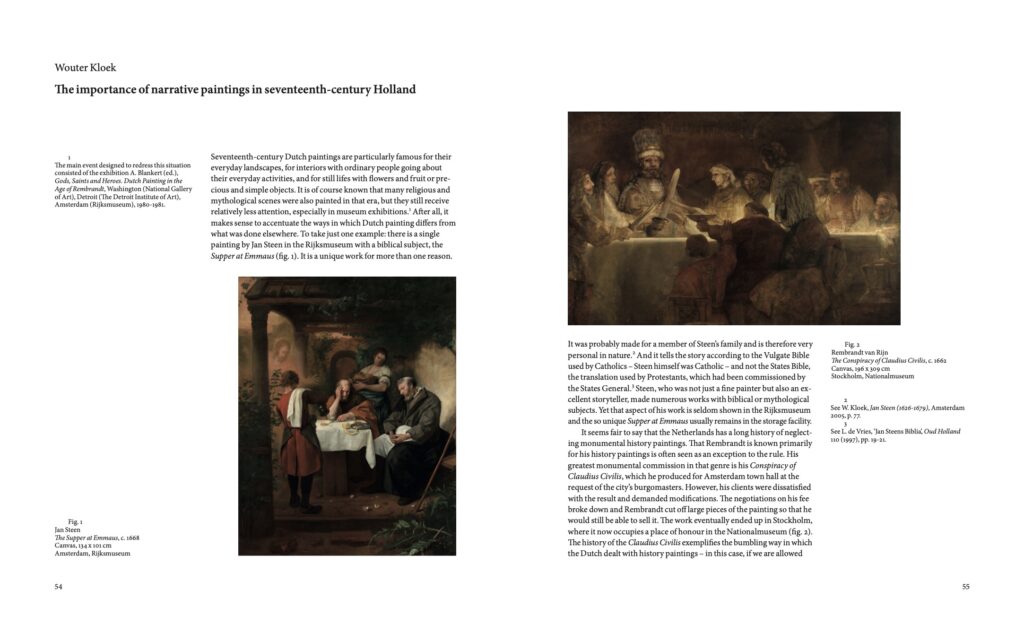
This essay explores why history and biblical scenes—long considered the highest form of art—gradually lost prominence in the Dutch Republic. While everyday subjects, portraits, and landscapes came to define Dutch painting, artists such as Rembrandt and Jan Steen continued to create powerful narrative works, often for private or religious patrons. The text contrasts the Catholic South, where large altarpieces by Rubens and Van Dyck flourished, with the Protestant North, where Calvinist restrictions on church imagery and a bourgeois art market favored smaller, secular works. Still, history paintings remained vital for civic commissions, conveying moral lessons through classical or biblical stories. Examples include Rembrandt’s *Conspiracy of Claudius Civilis* and Bol’s moralizing scenes for the Admiralty. Over time, the rise of private collecting and middle-class tastes shifted Dutch art from grand allegory to intimate realism, marking a cultural transformation in subject and scale.
Disclaimer: this podcast style story has been produced with the help of GoogleLM and may contain errors. The full essay is also posted below